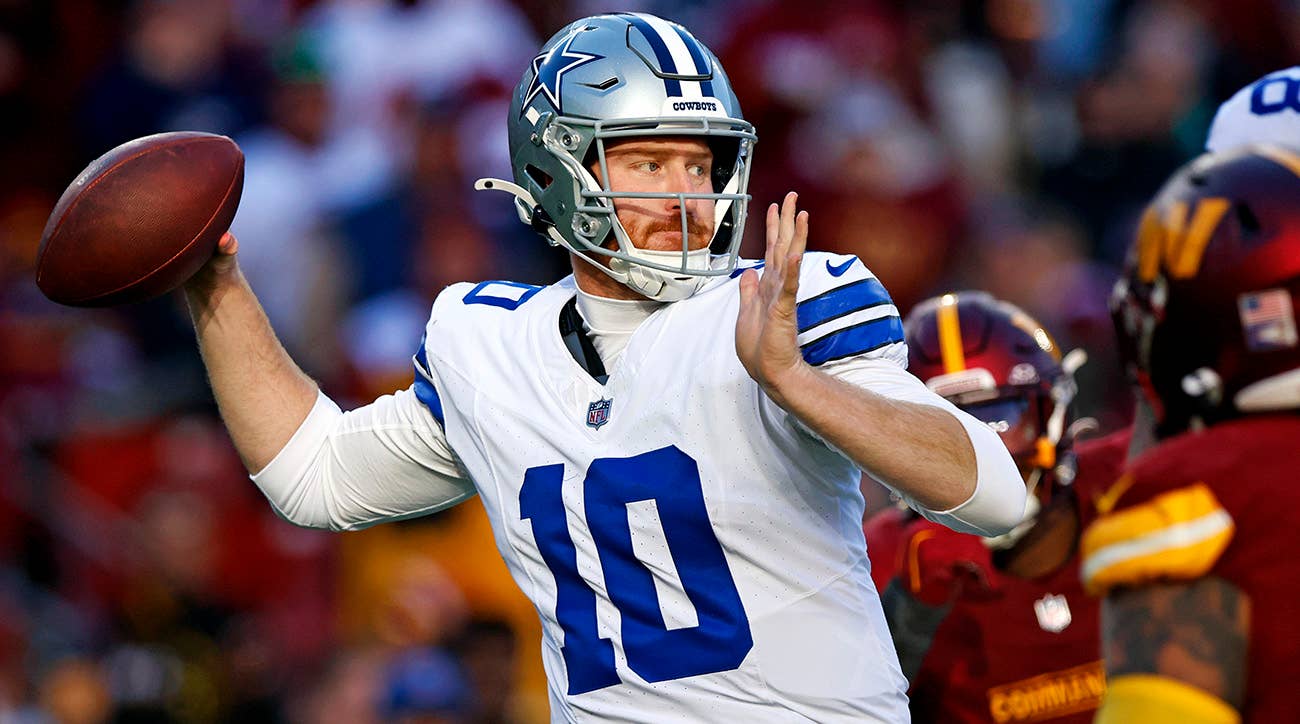
In a surprising turn of events during the NFL's Week 18, the Dallas Cowboys made a strategic decision that had significant financial repercussions for one of their players. The team chose to start Trey Lance instead of Cooper Rush in their game against the Washington Commanders. This decision not only impacted the game's outcome but also had a substantial financial impact on Rush, who missed out on a $250,000 bonus tied to his performance and playing time.
Cooper Rush has been a reliable backup quarterback for the Cowboys, stepping in whenever needed and delivering solid performances. His contract included performance-based incentives, a common practice in professional sports to motivate players and reward them for their contributions. One of these incentives was a substantial bonus that would be triggered if Rush played a certain number of snaps during the season. By starting Lance, the Cowboys effectively prevented Rush from reaching this milestone, costing him a quarter of a million dollars.
The decision to start Trey Lance over Cooper Rush has sparked a debate among fans, analysts, and sports commentators. Some speculate that the Cowboys were looking to evaluate Lance's potential as a future starter, given his promising talent and the investment the team has made in him. Others believe it was a strategic move to rest Rush for potential playoff games, ensuring he remains fresh and injury-free for the critical postseason.
Regardless of the reasoning behind the decision, the financial impact on Cooper Rush is undeniable. Missing out on a $250,000 bonus is a significant loss for any player, especially one who has consistently contributed to the team's success. This situation highlights the often-overlooked financial aspects of professional sports, where players' earnings can be significantly affected by coaching decisions and game strategies.
The incident also raises questions about the fairness of performance-based incentives and whether teams should consider the financial implications for their players when making strategic decisions. While these incentives are designed to motivate players and reward them for their performance, they can also create situations where players miss out on substantial earnings due to factors beyond their control.
For Cooper Rush, the missed bonus is a tough pill to swallow. Throughout the season, he has proven himself to be a valuable asset to the Cowboys, stepping up when needed and delivering solid performances. The decision to start Lance in the final game of the regular season, while strategic from a team perspective, has personal financial consequences for Rush.
As the Cowboys move forward, it will be interesting to see how this decision affects team dynamics and player morale. Will Rush feel undervalued or demotivated by the missed bonus, or will he continue to perform at a high level, motivated by the potential for future opportunities and rewards? Only time will tell.
In the broader context of professional sports, this incident serves as a reminder of the complex interplay between performance, incentives, and strategic decisions. It underscores the importance of considering the financial and personal implications for players when making game-time decisions. For fans and analysts, it provides a fascinating case study in the business of sports and the often unseen factors that influence the game.
---
Comments
Post a Comment